- All
- Product Name
- Product Keyword
- Product Model
- Product Summary
- Product Description
- Multi Field Search

Views: 6 Author: Site Editor Publish Time: 2026-04-23 Origin: Site


Polystyrene microspheres are small, spherical particles made from the synthetic polymer polystyrene. These microspheres, typically ranging in size from a few microns to several millimeters, are highly versatile and play a crucial role across a wide range of industries. They are known for their uniform size, stability, and ease of customization, which makes them suitable for applications in medical, cosmetic, industrial, and scientific fields.
In medical applications, polystyrene microspheres are used in drug delivery systems, diagnostics, and imaging techniques, while in cosmetics, they serve as exfoliating agents and texture enhancers. Their lightweight and durable nature also makes them ideal for use in packaging, insulation, and filtration systems. Additionally, polystyrene microspheres are key components in laboratory research, where they are used in bead-based assays and various experimental setups. Their widespread use and adaptability underscore their importance in advancing technological and scientific progress across multiple sectors.
Polystyrene microspheres are tiny, spherical particles made from polystyrene, a widely used synthetic polymer. These microspheres are typically uniform in size and are manufactured in various diameters ranging from a few microns to several millimeters. Due to their spherical shape and stability, they are used across many industries, including medical, cosmetic, and industrial applications. Polystyrene microspheres can be either solid or hollow, each offering distinct benefits depending on their intended use.
Polystyrene is a thermoplastic polymer derived from the polymerization of styrene, a liquid hydrocarbon. It is known for its rigidity, transparency, and ease of processing. When used to create microspheres, polystyrene provides a strong and stable base, ensuring durability and versatility in various applications. The microspheres can be engineered with specific surface properties to make them suitable for different functional uses, such as adhesion, coating, or drug delivery.
Polystyrene microspheres have several defining characteristics:
· Size: The diameter of these microspheres can range from microns to millimeters, with precision in size essential for many applications.
· Shape: They are perfectly spherical, which ensures uniform distribution in mixtures and solutions.
· Surface Properties: The surface of polystyrene microspheres can be modified or functionalized to enhance their interaction with other materials. They can be made hydrophilic or hydrophobic, depending on the application. These surface modifications enable microspheres to be used in specific settings like cell culture or diagnostic assays.
Solid polystyrene microspheres are dense, rigid spheres composed of solid polystyrene throughout their structure. These microspheres are widely used in applications where mechanical strength and surface stability are required. Common uses include as carriers in biomedical assays, as a base for coatings, and in the manufacture of diagnostic kits. They are also used in various industrial applications where their stability, smooth surface, and ability to withstand external stress are essential.
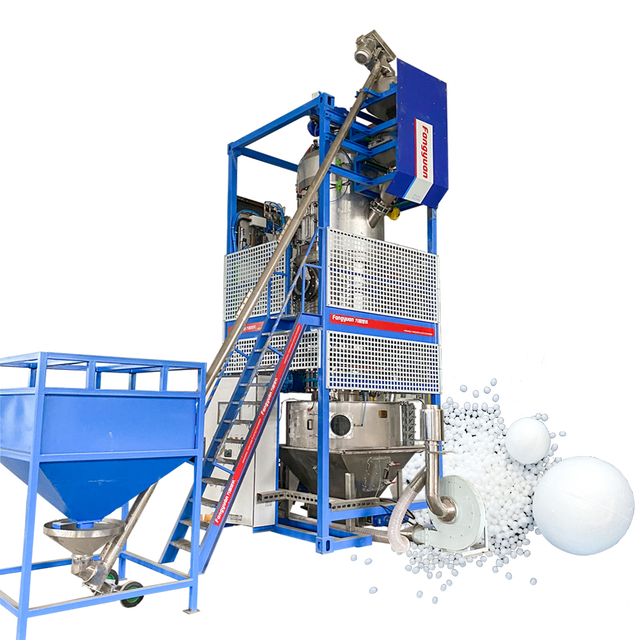
Hollow polystyrene microspheres, also known as EPS (Expanded Polystyrene) microspheres, are a specialized type of polystyrene microsphere. These microspheres are created by expanding the polystyrene polymer, resulting in hollow spheres with a lightweight structure. EPS microspheres have a much lower density compared to solid microspheres, making them ideal for use in lightweight applications such as insulation, packaging, and in the automotive industry for components requiring reduced weight without compromising on strength or stability.
EPS microspheres are also employed in the creation of thermally insulating materials and are used in the construction industry, where they provide efficient insulation for buildings. Their unique hollow structure allows them to trap air within the microspheres, offering excellent thermal resistance and cushioning properties. Furthermore, they are used in medical applications where lightweight, buoyant microspheres are needed, such as in certain diagnostic procedures or as carriers for controlled drug release systems.
Polystyrene microspheres are typically made using emulsion polymerization, where styrene monomers are dispersed in water with a surfactant and polymerization initiator. This method allows precise control over particle size and uniformity. Other methods like suspension polymerization are also used, depending on desired properties.
For EPS (Expanded Polystyrene) microspheres, a foaming agent is added during polymerization. When heat is applied, the microspheres expand, trapping air inside, which makes them lighter than solid microspheres. EPS microspheres are used in lightweight applications such as packaging, insulation, and automotive components.
Polystyrene microspheres are used in drug delivery systems, providing controlled or targeted release. They also serve in diagnostics and imaging, acting as supports for antibodies or in imaging techniques like flow cytometry.
In cosmetics, these microspheres are used for gentle exfoliation in facial scrubs and cleansers. Their smooth surface enhances the texture and feel of products like foundations and lotions.
Polystyrene microspheres are used in coatings for texture and spreadability, filtration systems for separating particles, and EPS microspheres in insulation materials for buildings and automotive applications due to their low density and thermal resistance.
In scientific research, polystyrene microspheres are used in bead-based assays for diagnostics and microbeads for cell sorting or biomarker detection, where they are functionalized to adhere to specific cells or molecules.
High Stability and Versatility
Polystyrene microspheres are known for their excellent stability, both chemically and physically. Their uniform size and shape, along with their ability to withstand various environmental conditions, make them highly versatile for use in many industries. Whether solid or hollow, they can be used in diverse applications, ranging from medical to industrial purposes.
Cost-effectiveness and Ease of Customization
These microspheres are relatively inexpensive to produce, especially in large quantities, making them cost-effective for various applications. Additionally, polystyrene microspheres are easy to customize in terms of size, surface properties, and functionality. This flexibility allows them to meet the specific requirements of different industries, such as drug delivery systems, coatings, or laboratory assays.
Biocompatibility (When Required)
Polystyrene microspheres can be modified to ensure biocompatibility when needed. This makes them ideal for medical and healthcare applications, such as drug delivery systems and diagnostics, where interaction with the human body is a key consideration.
EPS (Expanded Polystyrene) microspheres are hollow, lightweight particles created by expanding solid polystyrene microspheres. The expansion process traps air within the particles, reducing their density and making them suitable for applications requiring reduced weight. EPS microspheres retain the durability and stability of solid polystyrene while offering better insulation properties and thermal resistance.
EPS microspheres are widely used in packaging materials due to their lightweight nature and cushioning properties. They provide excellent protection for fragile goods during shipping. In insulation, EPS microspheres are commonly used to create lightweight, energy-efficient materials for buildings, refrigeration systems, and automotive components. In the construction industry, they are used in the production of lightweight concrete and other construction materials, enhancing thermal insulation and reducing weight without compromising strength.
Polystyrene microspheres are lightweight, stable, and highly customizable in terms of size, shape, and surface properties. They can be engineered to have different surface characteristics, such as being hydrophilic or hydrophobic, allowing them to be used in a wide range of applications. These microspheres can be either solid or hollow, with hollow variants like EPS microspheres being particularly popular due to their low density and excellent insulation properties.
In the medical field, polystyrene microspheres are used in a variety of applications, including drug delivery systems, diagnostics, and imaging. Their ability to be functionalized makes them ideal for controlled or targeted drug release, where they can carry medication to specific parts of the body. In diagnostics, they are used as carriers for antibodies or antigens, enabling assays like ELISA. Polystyrene microspheres also play a role in medical imaging, where their uniform size and stability aid in consistent results for techniques like flow cytometry or MRI.
Solid polystyrene microspheres are dense and rigid, making them ideal for use in applications where stability and strength are crucial, such as in diagnostic assays or as carriers in lab experiments. In contrast, hollow microspheres, like EPS (Expanded Polystyrene) microspheres, are much lighter due to their air-filled core, making them perfect for lightweight applications. EPS microspheres are commonly used in packaging, insulation, and automotive industries due to their ability to reduce weight without compromising on strength.
EPS microspheres are hollow, expanded polystyrene particles that are created by a foaming process, trapping air inside the microspheres and reducing their density. They are primarily used in packaging to provide cushioning for delicate items, in insulation for buildings and refrigeration systems, and in construction for lightweight concrete. Their excellent thermal resistance and low weight make them invaluable in applications where energy efficiency and material savings are important. EPS microspheres are also used in the automotive industry for lightweight components, contributing to fuel efficiency.
Polystyrene microspheres are versatile and durable particles with a wide range of applications across various industries. From medical uses like drug delivery and diagnostics to cosmetic formulations, industrial coatings, and scientific research, their ability to be customized in size, shape, and surface properties makes them an invaluable tool. EPS (Expanded Polystyrene) microspheres, with their lightweight and insulating qualities, play a crucial role in packaging, insulation, and construction. As technology continues to evolve, we can expect further advancements in microsphere technology, including more sustainable production methods, enhanced functionalities, and innovative applications in areas like nanomedicine, environmental protection, and advanced materials. The future of polystyrene microspheres promises even greater versatility and potential, driving progress across multiple fields.