- All
- Product Name
- Product Keyword
- Product Model
- Product Summary
- Product Description
- Multi Field Search

Views: 1 Author: Site Editor Publish Time: 2026-10-15 Origin: Site


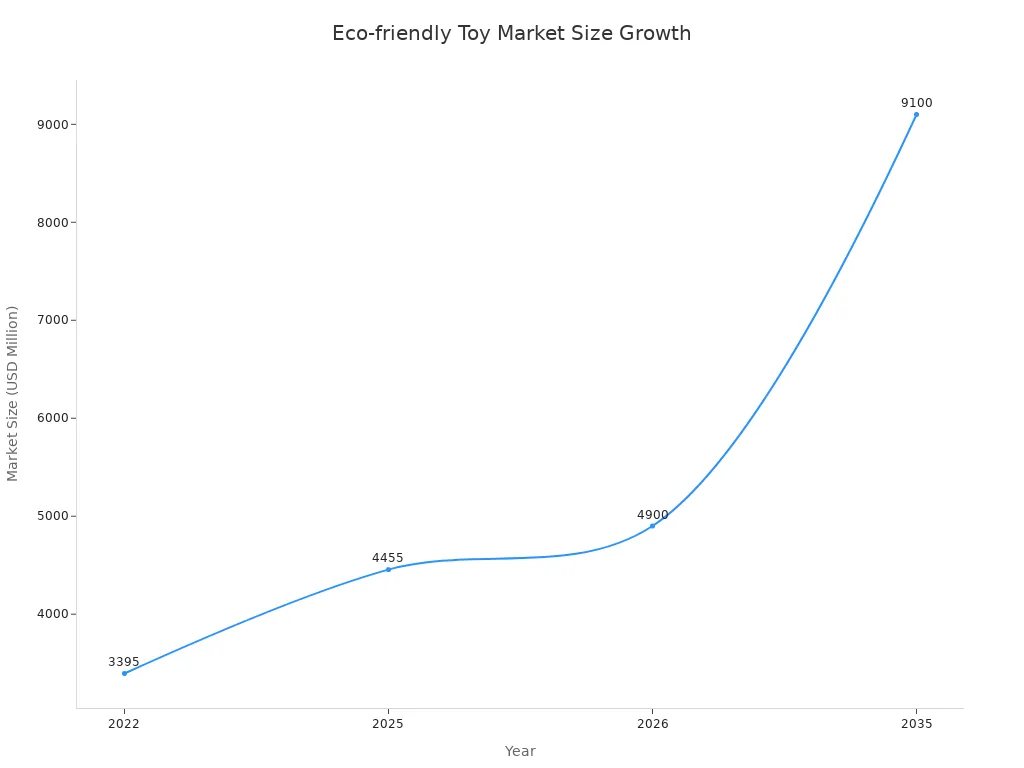
EPP foam gives modern toys a rare mix of safety, durability, and versatility. This lightweight, impact-resistant material is non-toxic and fully recyclable, so EPP is a great material for toys that children use every day. EPP foam toys stand out in active play, water play, and educational building sets. Demand keeps climbing: the eco-friendly toy market grew at a historical CAGR of 9.5% from 2022 to 2025, and the toy industry keeps moving toward safer, longer-lasting options.
Manufacturers choose this foam because it absorbs shocks, holds its shape, and supports colorful, easy-to-handle designs. Parents get peace of mind, and kids get gear that keeps up with them.
EPP foam is safe and not harmful, which makes it great for toys.
EPP foam is light in weight and takes in shocks, which protects children while they play.
EPP foam is very strong and keeps its shape even after many hits.
EPP foam is great for active play, water play, and educational building sets.
EPP foam can be recycled and helps make toys in a way that is better for the environment.
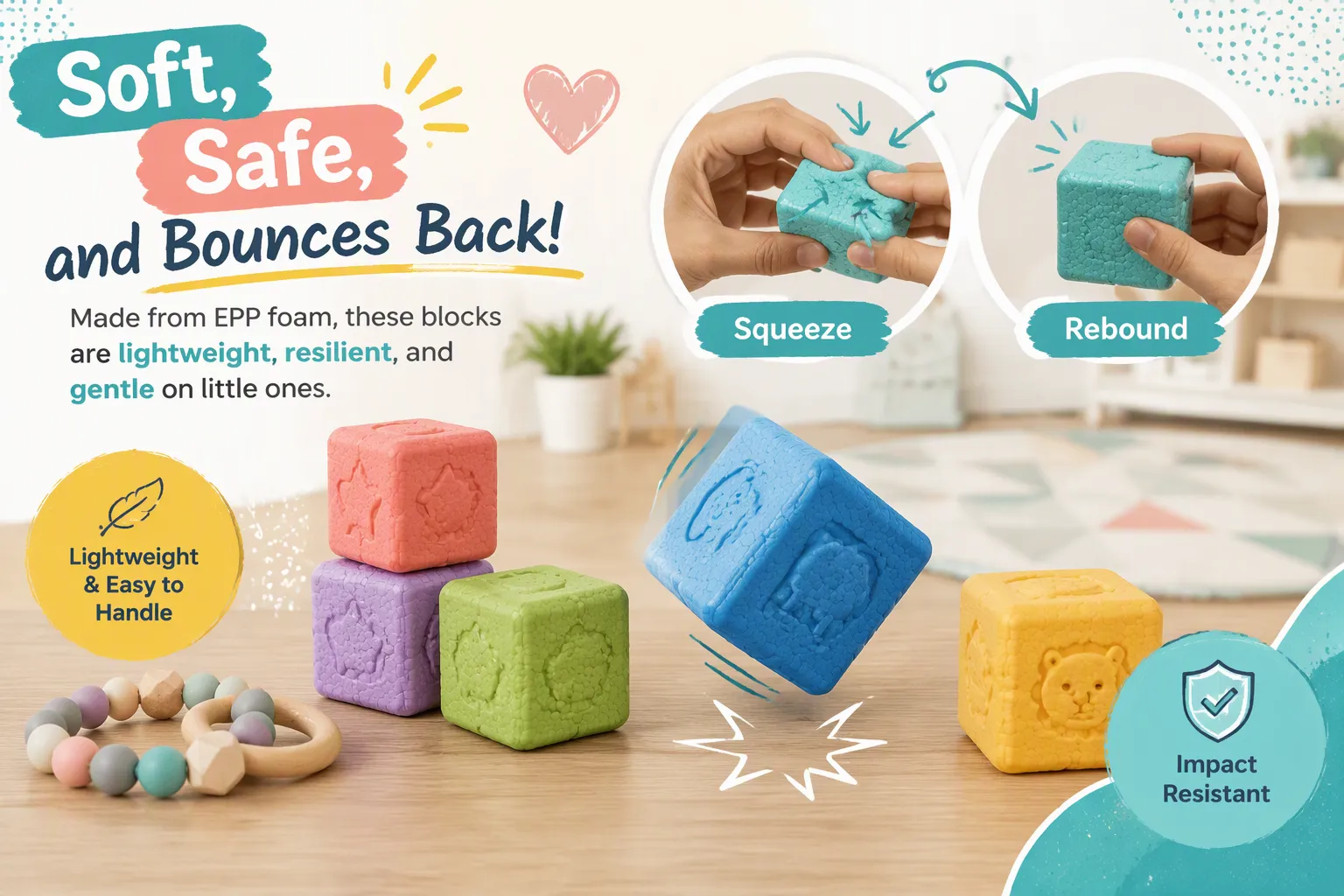
Expanded polypropylene (EPP) foam earns its place in modern toys through two connected strengths: it protects the people who play with it, and it survives the way they play.
Parents value toys that are lightweight, comfortable to handle, and able to absorb everyday bumps. EPP foam offers these properties, making it suitable for building blocks and other molded toy components. Material suitability depends on the selected foam grade, additives, and product design. Manufacturers should assess the finished toy against applicable safety requirements for its intended age group.
Weight shapes comfort as much as chemistry does. A block or ride-on body made from EPP foam weighs a fraction of a similar wooden or hard plastic part. That lightweight and shock-absorbing combo lets a toddler lift, carry, and stack pieces without strain. Lightweight impact resistance also lowers the force a falling toy transfers on contact. Dense foams can bruise a knee during a fall; this one gives way first. Safety here comes from physics, not just labeling: less mass in motion means less energy at the point of impact. A lighter part also means a lighter shipping carton, which helps freight costs and handling.
Repeated play punishes foam. Children compress, throw, sit on, and drop the same pieces hundreds of times. The foam handles that cycle better than most bead foams, and the measured properties explain why. Impact energy spreads across the cell walls instead of concentrating at one point.
Property | EPP Performance |
|---|---|
Elastic recovery rate | Greater than 95% — returns to original shape after compression or collision |
Energy absorption | 20–40 kJ/m², suited for repeated impacts |
Impact resistance | Outstanding; withstands multiple impacts with full recovery |
Fatigue resistance | Better toughness than EPS; holds shape under repeated impact without cracking or deforming |
The recovery figure tells the practical story. A piece that springs back past 95% of its original shape keeps its fit, its stacking geometry, and its visual appeal. Expanded polypropylene foam stays highly durable and resilient across many impact cycles, and it remains resistant to compression, impact, and deformation where bead foams with poor recovery would crush and stay crushed. That excellent impact resistance supports the durability parents notice over months of use, not just on the first day. Compression set stays low, so stored pieces do not arrive at the next play session flattened. Repeated drops on a hard floor test this property hardest, and the foam recovers each time.
The material also closes the loop at end of life. The foam is recyclable and eco-friendly in the sense that processors can regrind and remold it, and it contains no blowing agents that undermine that route. Manufacturers can trim scrap and feed it back into production, which cuts waste. That second life keeps material out of landfill. This section's evidence does not quantify cycle counts to failure, so treat fatigue claims as qualitative: EPP outlasts EPS under repeated stress, and it keeps its shape far longer than a single-use foam would.
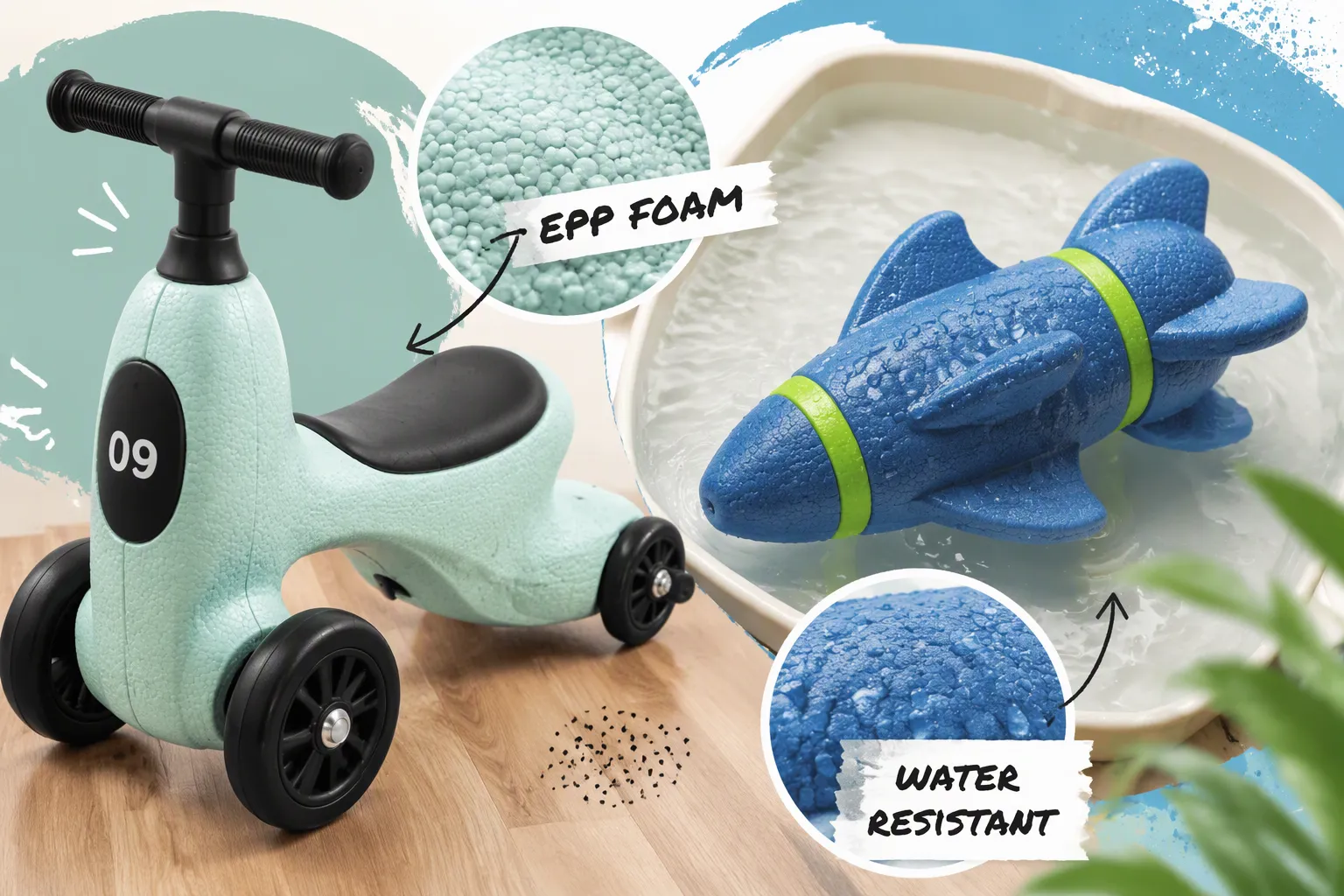
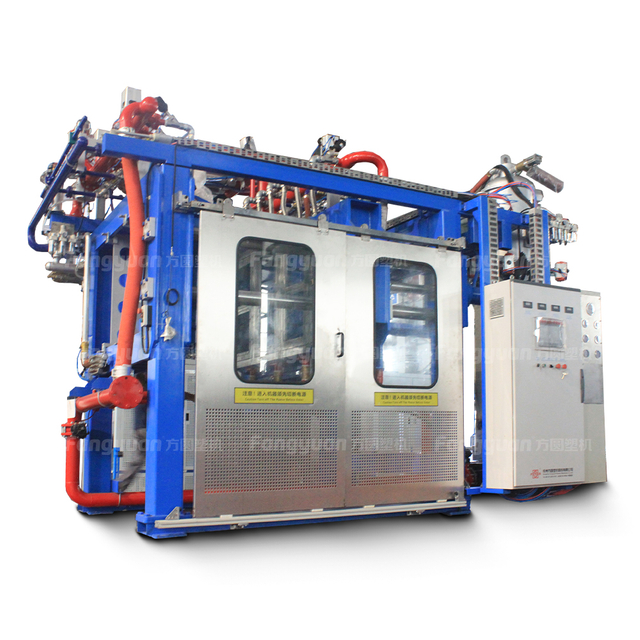
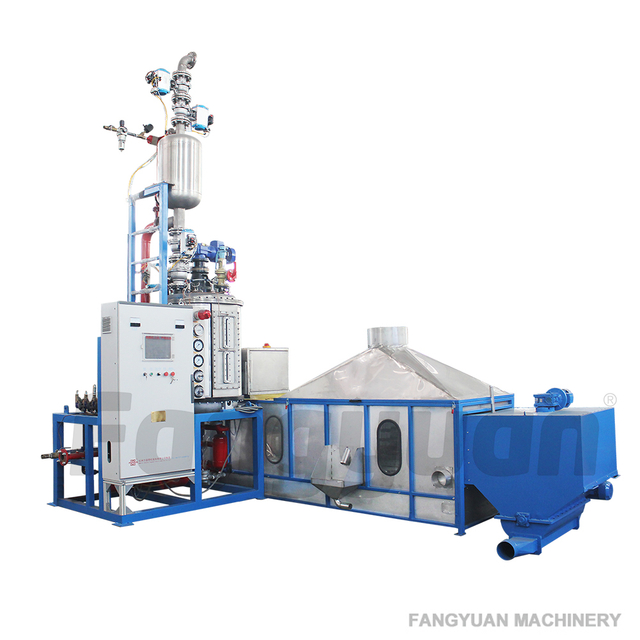
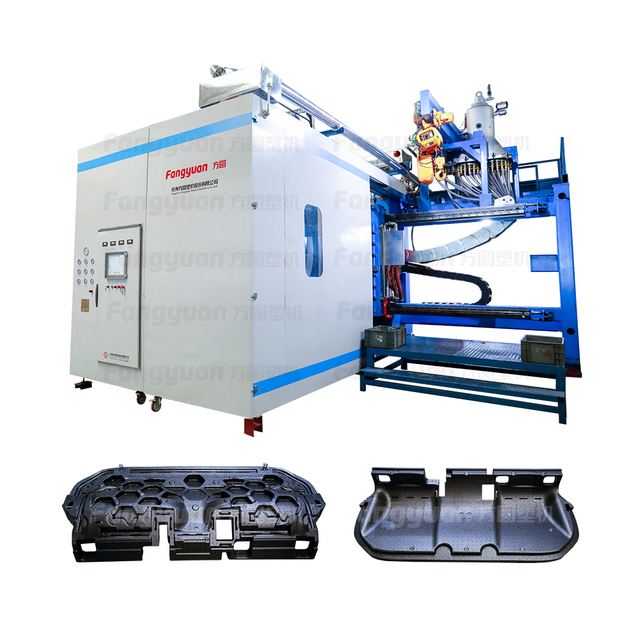
The application of EPP foam in toys covers three broad arenas: active play, water and outdoor use, and learning sets. Each arena asks the material to do a different job. EPP foam is used in the toy industry because a single material family meets all three demands. Manufacturers use EPP shape molding machines to produce foam components for different toy designs.
Impact absorption and energy management drive the case for active play. A running child who trips into a padded ride-on body meets foam that spreads the force across many cell walls. The foam deforms, then springs back past 95% of its original shape. That recovery keeps the part safe for the next collision. Ride-on toys benefit most from this behavior. Their bodies must carry weight, survive curb drops, and stay stiff enough to steer. EPP foam handles repeated compressive loads without cracking, so a scooter deck or a rocking base keeps its geometry. EPP foam toys in this category also stay light. A parent can lift a ride-on toy into a car trunk with one hand. Lighter parts carry less momentum into a fall, which lowers the energy children feel on impact. Designers use the same property to tune flex: a thicker wall softens the ride, and a thinner wall sharpens response. Playground pads and soft blocks follow the same logic. A block that compresses on impact and recovers at once protects a toddler's head during a tumble. Rigid plastic parts transfer the full shock to the body; foam parts spread it over a wider area and a longer time. That longer contact time is the heart of energy management. The foam also resists fatigue under repeated stress, so a trampoline pad or a balance beam cover keeps its cushioning after many sessions.
Water play rewards a closed-cell structure. Open-cell foam soaks up water like a sponge. EPP foam behaves differently:
Closed cells block water infiltration, even after a cut or puncture.
Trapped inert gases help the foam hold buoyancy over time.
The foam keeps floating after repeated compression and load cycles.
EPP resists fuels, oils, and UV exposure.
These traits suit floating mats, pool noodles, and floating rings. A ring that stays buoyant after a season of squeezing gives parents real value. Sun exposure breaks down many polymers, yet EPP resists UV degradation, so a pool toy keeps its color and strength outdoors. Ozone resistance adds the same protection in stored or covered conditions. Two supporting benefits matter here as well. Low thermal conductivity keeps a floating mat comfortable on hot days, and vibration absorption softens the bump of a wave or a dock. The surface also wipes clean with a damp cloth, which makes EPP easy to clean and maintain hygiene standards around shared water toys. Toys made from EPP foam therefore move from the pool to the beach to the garage without special care. Outdoor games extend the same benefits. EPP foam toys for the garden shrug off dew, rain, and rough ground. The material does not rust, splinter, or peel, so a garden set lasts across seasons. Storage stays simple: stack the pieces, hose them down, and let them dry.
Stacking and building play asks a lot of a material. Pieces must grip, balance, and survive a tower collapse without cracking. EPP foam meets these demands well. Its high elastic recovery means a block that tumbles off a stack returns to shape, so the next attempt starts from a clean piece. Soft edges also make safe stacking possible for young builders. A wobbling tower of foam blocks poses little risk when it falls.
Construction play itself builds real skills. Children who balance towers, connect tracks, or bridge gaps work through problems by trial and error. Open-ended pieces let them build castles, spaceships, or robots and take ownership of the result. They plan a structure, pick materials, and judge progress as they go. Collaborative builds add teamwork, communication, and conflict resolution to the mix. Research supports the payoff: a Purdue University study found preschoolers in guided block play improved counting, shape recognition, and math vocabulary, along with focus, memory, and cognitive flexibility. A Harvard Center on the Developing Child resource linked hands-on spatial play to brain pathways for attention, working memory, and self-regulation.
Color and shape carry learning weight in EPP foam toys. Bright, contrasting pieces help a child sort by hue, count a stack, and name a shape. Manipulating pieces in three dimensions builds spatial awareness and geometry sense, which lay groundwork for engineering and architecture later. Building also exercises executive function: a child plans a build, adapts when it topples, and persists toward a goal. Memory and focus grow through repeated trial and error.
Ease of use matters just as much. Lightweight pieces let small hands lift and reposition them without frustration, and that independence keeps a child engaged in the task. Designers can mold letters, numbers, and interlocking shapes directly into the foam, so the toy teaches through its form. These qualities support a safe, educational, and eco-friendly childhood, and they put children's well-being and development at the center of the design. Toys made from EPP foam therefore earn a place in classrooms and playrooms alike.
It is rare to find one material that is safe, strong, and good for the planet. EPP foam gives families all three at once. A toy that cannot hurt a child, lasts through years of rough play, and can be recycled at the end of its life is worth more than one season. Parents pay once and keep using it.
The end-of-life story is worth a closer look. EPP foam can be recovered in several ways:
Reuse or repurpose it as packaging inserts, protective padding, or construction insulation
Mechanical recycling, where the foam is ground, melted, and remolded into new products
Chemical recycling, which recovers pure polymer parts for new foam
Thermal recycling, which turns foam into reusable pellets or energy using controlled heat
EPP has no chemical cross-linking agents and is called 100% recyclable: it can be melted down, re-extruded into polypropylene resins, and put back into manufacturing loops.
That closed loop supports safe, durable, and eco-friendly play. A light block that springs back after every tumble also has a real second life. Families get fewer replacements and less waste from the same purchase.
The toy industry values materials that balance safety, function, and sustainability on the production line. EPP fits that need well. Its molding process uses only the foam each part needs, and fast cycles keep output high.
Advantage | Supporting Detail |
|---|---|
Cost-effectiveness | Shape molding machines use only the required foam and keep production cycles fast |
Reduced material waste | Precise control over foam usage limits scrap during production |
Energy efficiency | Efficient heating and cooling systems cut energy consumption |
Speed and scalability | Adjustable settings scale production up or down with order volume |
Automation savings | Automated systems improve consistency and reduce downtime |
These traits suit high-volume runs of epp foam toys, from blocks to ride-on bodies. EPP foam also regrinds cleanly, so trim scrap can go back into production. Other materials still fit specific jobs, such as rigid parts that need sharp detail. For soft, protective, recyclable parts, epp remains a strong fit. The material supports safety, durability, and sustainability goals without trade-offs that weaken the design.
EPP foam combines safety, durability, and versatility in a single material. It is non-toxic once finished, and it comes from polypropylene used in food-contact products. Its memory feature lets it bounce back after repeated impacts and compression. These traits work well for active play, water play, and building sets alike.
Parents get lasting value from EPP foam toys that survive drops, pool days, and tower collapses. Toy makers get a material that molds cleanly and regrinds scrap. The toy industry keeps moving toward safer, longer-lasting options, and EPP foam remains a smart choice for both families and manufacturers.
Yes. The base resin meets food-grade material standards, so the foam carries no harmful additives. Its safety comes from the material itself, not a coating. Wear does not expose a different surface. Parents often choose it for teething rings, soft blocks, and play mats.
No. The foam recovers more than 95% of its original shape after compression or collision. It absorbs 20–40 kJ/m² of energy and withstands multiple impacts with full recovery. Stored pieces do not arrive flattened at the next play session.
Yes. Closed cells block water infiltration, even after a cut or puncture. Trapped inert gases help the foam hold buoyancy over time. It also resists UV exposure, fuels, and oils, so floating mats and rings keep their color and strength outdoors.
Soft edges make safe stacking possible for young builders. Lightweight pieces let small hands lift and reposition them without frustration. Designers mold letters, numbers, and interlocking shapes directly into the foam, so the toy teaches through its form.
Yes. EPP has no chemical cross-linking agents, so processors can melt it down and re-extrude it into polypropylene resins. Manufacturers can also regrind trim scrap and feed it back into production, which cuts waste and keeps material out of landfill.