- All
- Product Name
- Product Keyword
- Product Model
- Product Summary
- Product Description
- Multi Field Search

Views: 1 Author: Site Editor Publish Time: 2026-10-22 Origin: Site


ETPU foam is expanded thermoplastic polyurethane. It is a light, bouncy material made of tiny foam beads stuck together. Shoe soles made with it offer a rare mix: comfort, cushioning, and energy return that lasts many miles.
The energy return number explains why people like it. Independent testing shows ETPU foam gives back more than 70% of the energy you put into it. Standard EVA gives back about 50–60% by comparison.
Material | Energy Return Rate |
|---|---|
ETPU | 70%+ |
EVA | 50–60% |
That gap shows up as a livelier step and less tiredness underfoot. ETPU also keeps its shape well over time.
ETPU foam gives back more than 70% of the energy you put in. This makes each step feel bouncier and less tiring.
ETPU foam is light and soft, so your feet feel good on long walks or runs.
ETPU foam holds its shape and bounce over many miles, even in cold or hot weather.
ETPU foam can be fully recycled, which helps brands reach their sustainability goals.
ETPU foam costs more than EVA, so it works best for high-performance shoes where comfort and durability matter most.
Expanded thermoplastic polyurethane begins as thermoplastic polyurethane, or TPU. The expansion process turns this plastic into a light, stretchy foam. The result blends rubber-like stretch with the strength and workability of plastics. This double nature explains much of the material's appeal for footwear.
The inside structure matters just as much as the chemistry. Expansion creates a foam full of tiny cells, either closed or connected to each other. These cells give the foam its cushioning and shock-absorbing performance. A few key traits come from this design:
Lightweight build with low density
Elastic recovery after compression
Recyclable material chemistry
These traits set up everything that follows about how ETPU performs in soles.
Production moves through a clear order, from raw resin to a finished part. Each stage shapes the final cell structure and the properties a sole will deliver.
TPU resin is processed into small particles or beads.
The beads expand through a controlled foaming process, possibly using supercritical CO₂ or other physical foaming technologies depending on the material and system.
The expanded beads come out as lightweight TPU beads with a cellular structure.
The expanded beads are loaded into a mold.
Steam and heat soften and fuse the beads together.
After molding and cooling, the finished component is taken out of the mold.
Steam molding is the step that joins single beads into one solid piece. Fused bead boundaries give etpu foam its usual look and its even cushioning. The process also allows exact shaping of midsoles and other sole parts. This manufacturing route keeps etpu foam lightweight, elastic, and recyclable, three qualities that matter through the rest of this guide.
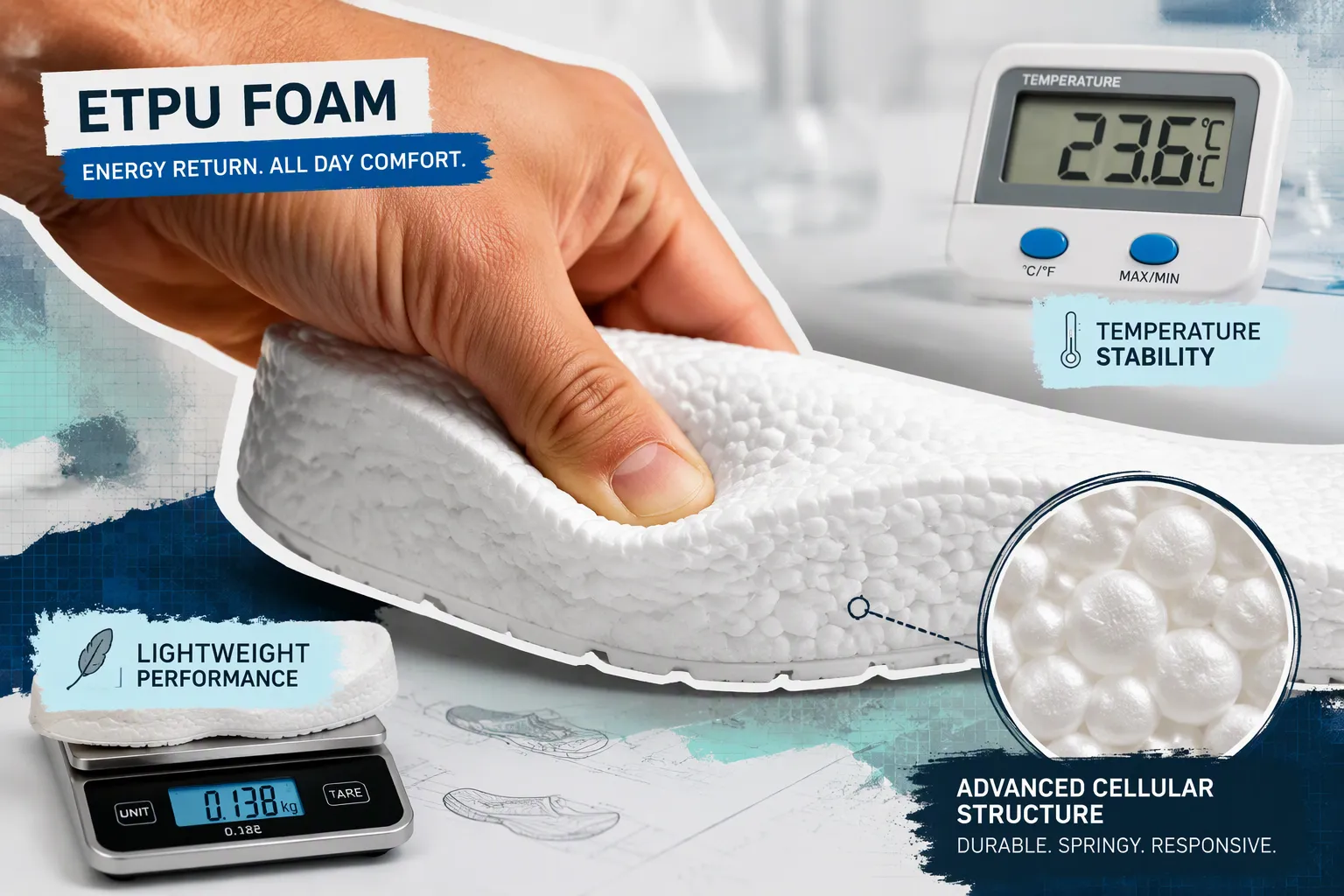
ETPU foam stands out from many common sole materials because of how it returns energy. Tests show ETPU gives back 70–75% of the energy you put into it. Each step pushes energy into the sole, and the foam sends much of it back. Runners say this feels like a spring under their feet.
High energy return comes with strong shock absorption. The foam cells squeeze on impact and spread the load over a wider area. This makes the landing part of every stride softer. Less impact travels up through the foot, the leg, and the lower back. Tiredness builds more slowly on long walks and long training days.
Low density adds to the comfort story. ETPU foam falls in the 0.15–0.25 g/cm³ range. A thick midsole made from it stays light on the foot. The material is flexible, durable and lightweight at the same time, a mix that few foams deliver together. Compression set stays below 10% after 24 hours at 50% strain. The sole keeps its shape instead of flattening into a pancake.
Durability and abrasion resistance are core strengths of the ETPU material. The TPU matrix keeps excellent mechanical strength after expansion. Tear strength usually runs 2–3 times that of EVA at similar density. That gap favors high-wear uses such as athletic outsoles and industrial cushioning. ETPU also shows high wear resistance and bending resistance, plus good resistance to oils and many chemicals for suitable grades. Chemical resistance varies by grade, so buyers should test the actual exposure.
Rubber-like elasticity supports the durability story. The foam springs back after repeated loading instead of staying compressed. This gives lightweight yet durable performance across many miles of use. The material also offers superior cushioning that holds up over time, not just on the first wear.
Temperature stability shapes real-world performance. ETPU holds steady across a tested range from −50°C to 120°C. Its glass transition sits near −25°C. Stiffness drops sharply below that point and stays nearly constant up to 80°C. Between −20°C and 60°C, compression modulus and energy absorption decline only gradually. Higher-density samples show greater values across that span. Recovery after 75% compression stays impressive from −50°C to 60°C, with minimal residual deformation after 72 hours at room temperature. Prior exposure at −40°C even produced about a 10% gain in energy absorption in later compression tests. For footwear, the practical operating range of −20°C to +40°C covers most climates and seasons. A winter run and a summer walk both get consistent cushioning and shock-absorbing properties from the same sole.
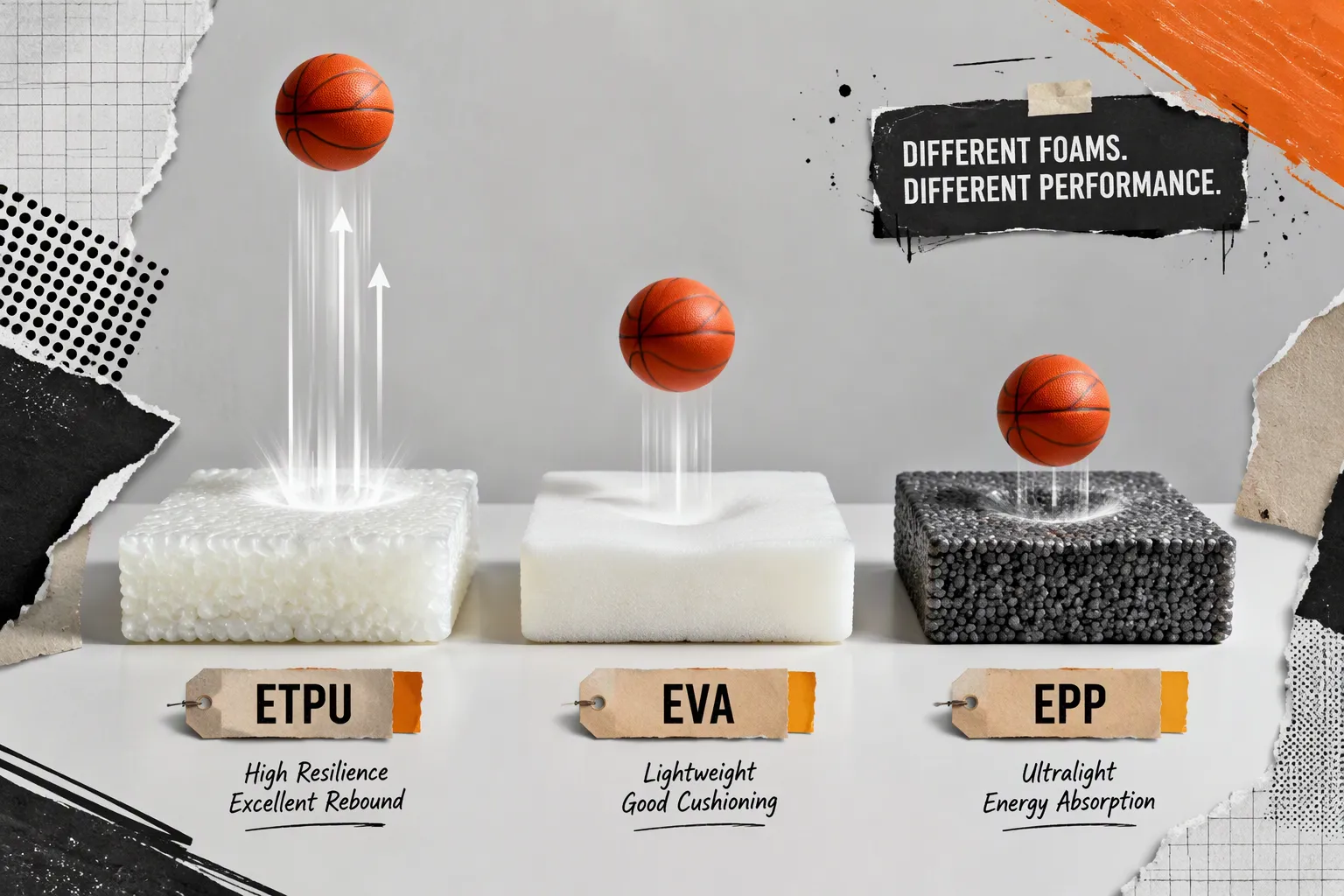
Each material gives a sole its own set of strengths. The table below compares the main measurements side by side.
Performance Metric | ETPU | EVA |
|---|---|---|
Rebound Resilience | Ball rebound 60%–69% | Typically 40%–45% |
Compression Set | Controllable within 30% | Prone to permanent deformation |
Low-Temperature Performance | Elastic at -25°C to -20°C | Stiff and brittle in cold |
Abrasion and Flex Resistance | High (inherits TPU properties) | Comparatively weaker |
Elongation at Break | Up to 6–7% (2–3x EVA) | Relatively low |
Sustainability | Fully melt-recyclable | Chemically crosslinked, non-recyclable |
The rebound gap explains a lot. ETPU gives back a high amount of energy, and its ball rebound sits well above the normal EVA range. Compression set stays controllable within 30%, so the foam gets its shape back after a load. EVA tends to lose its shape over time under the same conditions. Cold weather makes the gap even wider. ETPU stays elastic at -25°C to -20°C, while EVA becomes stiff and brittle.
EPP deserves its own look. This foam stands out in one-time energy absorption, which makes it a strong pick for single-event protection. ETPU works in a different way. It takes repeated hits, absorbs the energy, and springs back to its original shape. That multi-hit behavior suits parts that face many impacts over their life.
Weight and cost finish the picture. EVA is still the lightest and least expensive option. ETPU weighs more and costs more. TPU-class foams also hold up well under dynamic loads, with a temperature range from -30°C to +120°C. These etpu foam characteristics explain why the material earns its place in demanding designs.
Fit matters more than a single winning number. Each foam has a place where it works best.
ETPU excels in high-performance and demanding use. Athletic midsoles, heel supports, and repeated-impact parts all gain from its rebound and resilience. The balance of low weight, performance, and durability makes it a natural choice for premium running shoes and training footwear. Designers who need a footwear foam that keeps its spring mile after mile often choose ETPU.
EVA remains a solid choice for entry-level running shoes, sandals, and everyday models. It is light, affordable, and easy to work with. Many successful shoes use it well. EPP fits single-event energy absorption, such as protective inserts and automotive or HVAC parts. No material loses here. The right pick depends on the job, the budget, and the number of impacts expected.
Athletic shoes put foam under steady pressure. Each step squishes the material and asks it to bounce back. ETPU handles this cycle well. Studies of high-rebound ETPU beads for basketball shoe midsoles show strong energy return and steady performance over many games. The material takes the hit when you land and gives energy back when you push off.
Several traits work together in a full ETPU midsole:
Strong shock absorption that softens impact during play
High resilience from precise bead molding
Energy return that adds lift to each step
Less foot tiredness across a long session
A full ETPU midsole also resists compression set. The foam springs back after repeated loading instead of packing down. Cold weather does not stop this. The material keeps its flexibility and cushioning in low temperatures. Makers can shape insoles and midsoles from the same bead family, so the ride stays consistent from heel to toe. For high-performance shoes, this mix of rebound, durability, and cushioning makes ETPU a practical build choice.
Work shoes need light weight and reliable shock absorption. ETPU gives both. Its closed-cell structure holds air pockets that squeeze and recover under force. That design produces high resilience and long-lasting comfort. The foam stays soft and bouncy through repeated compression and across a working range of −20°C to +40°C. It also comes in a range of hardnesses, so a firmer or softer feel is possible.
The PU/PU sole with integrated E-TPU cushioning technology is built to greatly improve shock absorption and energy return. By adding E-TPU elements into the sole structure, the shoe gives better underfoot comfort and less tiredness during long standing and walking, especially in indoor working conditions.
The case for etpu in safety shoes rests on this comfort profile. Soft, energy-returning foam supports the body's own shock absorption and eases strain from long shifts on hard floors. Casual sneakers gain the same benefits in a lighter package. An etpu foam midsole gives everyday wearers a lively step and steady support. Designers often pair insoles and midsoles made from etpu to keep the whole footbed consistent.
Cost is the first thing many buyers want to know about etpu. It usually costs more than EVA and EPP. A few things cause that price gap. TPU resin costs more than EVA resin. The foaming and steam-molding steps add work and energy. Keeping the process under tight control also makes good parts cost more. The choice of ETPU molding machines also affects equipment investment and production planning.
Value depends on what the shoe is for. A cheap sandal does not need top-level bounce. A racing shoe does.
ETPU makes sense for true elite performance platforms where no compromise on energy return or durability is acceptable and the retail price can absorb the premium.
For everyday models, EVA still gives good comfort at a lower price. The etpu material is worth its cost when a sole has to handle many miles of repeated loading without going flat.
Footwear materials face more and more rules. Trusted suppliers meet them in several ways:
ISO quality management certifications
REACH chemical safety compliance
SATRA laboratory testing approvals
Zero-VOC emission standards
ETPU foam helps meet these goals through clean foaming. Supercritical fluid physical foaming takes the place of harmful chemical blowing agents, so the foam has zero chemical residue. Policies like the EU Green Deal and U.S. EPA emissions standards also favor lighter, more efficient materials. One gap is still there. Standard test methods for ETPU, especially bio-based grades, are still limited.
Recyclability adds real value at the end of a product's life.
Foam Material | Recyclability |
|---|---|
EPP | Limited |
ETPU | Fully Recyclable |
EPPO | Fully Recyclable |
EPS | Recyclable |
When recyclability is a priority, EPP and ETPU are recommended as ideal choices for sustainable production.
Melt-recyclable chemistry lets ETPU scrap go back into the process. That trait helps brands hit sustainability targets without losing performance.
ETPU foam gives shoe soles a mix you don't see often. Its high energy return makes each step feel lively. Light cushioning takes pressure off feet and legs. Strong durability and steady performance in every season keep the ride the same. These traits make etpu a great choice for tough footwear.
Fit still leads the choice. High-performance and repeated-impact designs get the most from ETPU. EVA and EPP stay solid choices for entry-level and single-event uses. Going forward, recyclable chemistry and multi-material molding point to a bigger role for ETPU in sole design. Brands that care about long-term comfort and performance will find this material worth watching.
Tests show ETPU foam gives back 70–75% of the energy pushed into it. Standard EVA returns about 50–60%. That difference shows up as a livelier step and less tiredness underfoot on long runs and walks.
No. ETPU foam falls in the 0.15–0.25 g/cm³ density range. A thick midsole made from it stays light on the foot. The material combines low weight with strong cushioning, so comfort does not come at the cost of extra ounces.
Yes. ETPU holds steady across a tested range from −50°C to 120°C. Its practical footwear range of −20°C to +40°C covers most climates and seasons. A winter run and a summer walk both get consistent cushioning from the same sole.
Compression set stays below 10% after 24 hours at 50% strain. The foam springs back after repeated loading instead of packing down. Tear strength usually runs 2–3 times that of EVA at similar density, which favors high-wear uses.
Yes. ETPU uses melt-recyclable chemistry, so scrap can go back into the process. This helps brands hit sustainability targets without losing performance. Standard test methods for ETPU, especially bio-based grades, are still limited.