- All
- Product Name
- Product Keyword
- Product Model
- Product Summary
- Product Description
- Multi Field Search

Views: 1 Author: Site Editor Publish Time: 2026-10-01 Origin: Site


EPS pallets are light in weight and protect against heat and shock. These traits make foam pallets a good fit for cold chain shipping, air freight, and shipments that damage easily. Food and beverage, pharmaceutical, electronics, and retail operations use EPS pallets most often. The logistics and transportation industry values this packaging because it balances cost and performance. Readers will see how EPS pallets compare with wood, plastic, and metal on cost, performance, and compliance. Each material plays a distinct role in the supply chain. This comparison helps teams choose pallets with confidence for any transportation task.
EPS foam pallets weigh very little, which brings shipping costs down, especially for air freight and express deliveries.
EPS foam pallets offer great insulation and shock absorption, which protects goods that are sensitive to temperature and fragile items.
EPS foam pallets are best for cold chain shipping, air freight, and delicate items. Wood, plastic, and metal pallets work better for heavier loads.
EPS foam pallets do not need ISPM 15 treatment for export, which makes international shipping simpler.
Using EPS pallets again and recycling them helps the environment and cuts down on waste.
Expanded polystyrene (EPS) begins as tiny beads. Heat and steam make these beads grow into a light foam. Manufacturers press the foam into a solid shape. This process makes a one-piece pallet with no nails, screws, or loose parts. The molded build makes EPS pallets different from wood, plastic, and metal pallets. Wood pallets use boards and fasteners. Plastic pallets are often put together from separate parts. Metal pallets depend on welded frames. A pallet made from expanded polystyrene is formed as a single unit. This design keeps out moisture and has no splinters or sharp edges.
Buyers can pick from several standard formats. Nestable foam pallets have legs that fit into each other when empty. This design saves space in storage and return shipping. Stackable styles have a flat bottom deck for block stacking in warehouses. Flat-packed shipper styles pair a pallet base with a fitted lid or sleeve. These units work well for one-way export shipments. High-density EPS variants serve factory and freight operations. Structural grades reach densities of 23–45 kg/m³. Load-bearing foot sections can reach 40–45 kg/m³ near the base.
Standard footprints follow common industry sizes. The table below shows typical dimensions and load ratings for EPS pallets.
Pallet Size | Dynamic Load | Static Load |
|---|---|---|
48×40" (most common) | 1,500–2,800 lbs | up to 30,000 lbs |
47×47" | 1,200–2,200 lbs | up to 28,000 lbs |
43×43" | 1,200–2,000 lbs | up to 25,000 lbs |
48×32" | 1,200–1,800 lbs | up to 22,000 lbs |
Load ratings differ by manufacturer and leg count. Six-, nine-, and twelve-legged designs each hold different amounts. Teams should check ratings with the supplier before choosing any pallet for a given load.
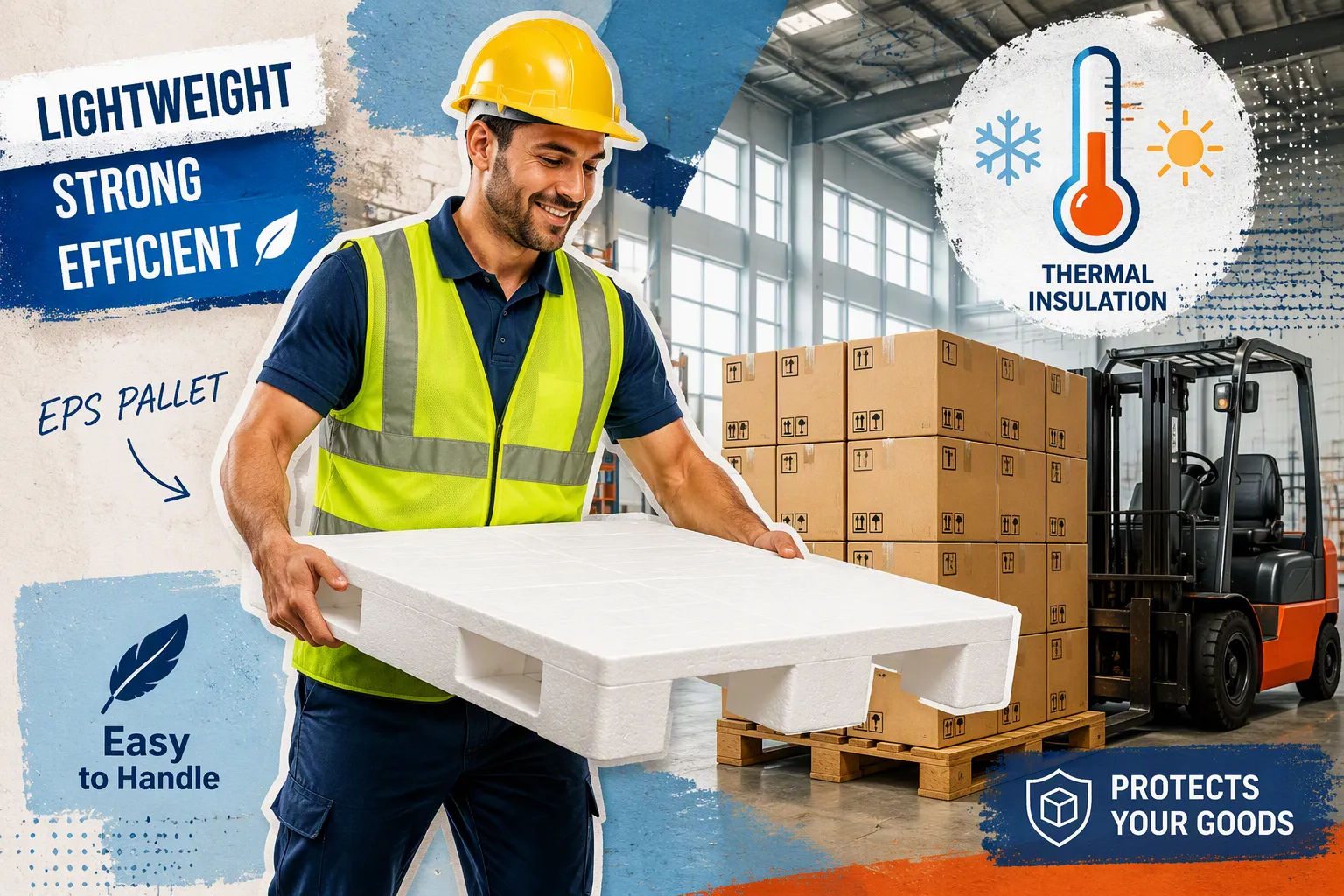
Weight is a big part of cost in every way goods are shipped. An EPS pallet weighs much less than a similar wood or metal pallet. Airlines and express carriers charge by weight, so every pound saved on the pallet makes room for paying cargo. Shippers notice this most on air freight routes and parcel networks, where less pallet weight means lower freight bills. The benefits of EPS pallets show up on the bill, not just at the loading dock.
Handling gets easier too. Warehouse workers can often move foam pallets by hand without lift equipment. Fewer forklift trips mean faster dock turns and less chance of injury. This light and strong material also cuts fuel use in trucking fleets. A lighter trailer load uses less fuel on every route. These savings add up over a full year of shipping.
EPS foam keeps heat out well. The material gives about R-4 to R-5 per inch of thermal resistance, and that R-value stays steady for the life of the product. Cold chain shippers depend on this trait to hold temperatures during transit. A foam pallet shipper can replace a separate insulated container on some routes, which makes packaging simpler and cuts material counts.
EPS Styrofoam insulation performance: about R-4 to R-5 per inch of thermal resistance
The R-value stays stable for the life of the product, so insulation performance does not wear down over time
Moisture resistance adds another layer of product protection. EPS does not soak up water, so pallets resist swelling, warping, and mold. Electronics, medical devices, and industrial parts arrive dry and clean. The built-in cushioning soaks up shock and vibration along the route. Delicate instruments and glass parts face less risk of breaking. This protection matters most on multi-leg trips with repeated handling.
Recyclable foam solutions close the loop. Many suppliers take back used EPS pallets and turn them into new foam products. That option supports sustainability goals and keeps material out of landfills.
Teams that compare freight costs with damage rates often find the benefits of EPS pallets convincing. The light build lowers shipping spend. The foam structure gives protection that wood and plastic cannot match on temperature-sensitive routes. For cold chain, air freight, and fragile cargo, EPS pallets earn their place in the logistics plan.
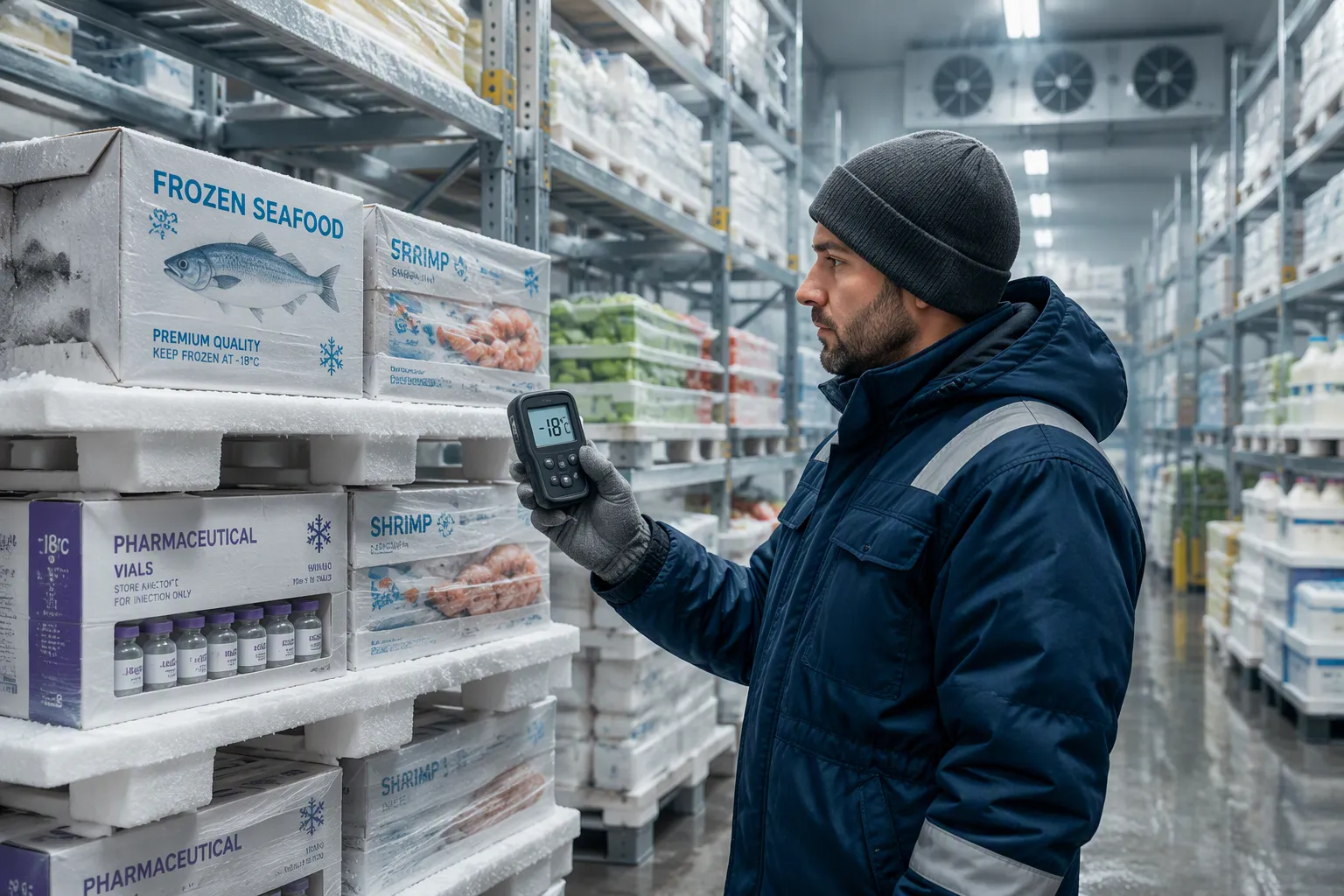
Keeping the right temperature is key to product quality in cold chain shipping. Frozen goods like ice cream and frozen seafood travel between -10°C and -20°C. Chilled goods such as fresh produce and dairy stay at 2°C to 4°C. Vaccines and temperature-sensitive medications stay between 2°C and 8°C. Some biological samples ship at cryogenic temperatures below -238°F (-150°C). EPS pallets help hold these ranges with steady insulation. The foam structure slows heat transfer and keeps internal temperatures longer during dock waits and multi-leg routes. For seafood shipments, EPS fish boxes can form part of the packaging system carried on the pallet.
Product Category | Temperature Range |
|---|---|
Frozen Goods (ice cream, frozen seafood) | -10°C to -20°C |
Chilled Goods (fresh produce, dairy) | 2°C to 4°C |
Pharmaceutical Goods (vaccines, medications) | 2°C to 8°C |
Ambient Temperature Goods (cosmetics, chemicals) | 15°C to 25°C |
Cold-Chain Goods (certain pharmaceuticals, foods) | 8°C to 14°C |
Cleanliness matters just as much as temperature. Food shippers follow HACCP, FSMA, and FDA or USDA rules. Pharmaceutical teams work under Good Distribution Practice and Good Manufacturing Practice. Wooden pallets in international trade need heat treatment and an ISPM 15 stamp. EPS pallets skip that step because foam carries no pest risk. Molded foam also has no cracks or joints where bacteria can collect. Teams clean and inspect foam pallets on a set schedule to meet hygiene standards in damp, refrigerated rooms.
Electronics, automotive parts, and retail goods all gain from foam pallets. Circuit boards, sensors, and glass displays need strong product protection on rough routes. The built-in cushioning of EPS absorbs vibration and impact across repeated handling. Automotive suppliers use foam pallets for fragile components in just-in-time deliveries. Retail distribution centers prefer them for one-way export loads and display-ready shipments.
Closed-loop supply chains get the most from EPS pallets. A manufacturer ships parts to a plant, and the same foam pallets come back for the next cycle. Nestable designs shrink return volume and cut backhaul costs. These applications of EPS pallets suit operations with tight routes and repeatable loads.
Foam pallets fit best where weight, insulation, and damage control drive the decision. Wood pallets remain a solid choice for heavy static loads and long service life. Plastic pallets serve washdown environments and automated lines. Metal pallets handle the heaviest industrial loads. Each option has a clear role in cargo and freight transportation. Matching the pallet to the load, route, and compliance rules gives the best result for any supply chain.
Cost, weight, and load capacity show the real story in any eps pallets vs. traditional pallets comparison. A foam pallet costs more per unit than a basic wood pallet. Plastic and metal pallets also come with higher upfront prices. The light build of EPS changes the math over time. Freight bills drop, handling gets faster, and one-way shipments avoid return costs. That weight reduction often pays back the higher unit price across a shipping season.
Load performance sets clear limits. Wood, plastic, and metal pallets handle heavier static loads and last many years of service. EPS pallets work well for moderate dynamic loads and shorter duty cycles. Teams should match the pallet to the load rather than force one type everywhere. The advantages of eps pallets show up in air freight, express networks, and closed-loop routes. Heavy machinery and rack storage favor wood, plastic, or metal.
Food contact and hygiene rules shape pallet choice. Molded EPS has no joints or cracks where bacteria collect, so cleaning stays simple. Plastic pallets also work well in washdown rooms. Wood pallets need careful inspection for splinters and moisture. Export rules matter just as much. Conventional wood pallets must meet ISPM 15, which requires heat or chemical treatment and a stamp proving it. Engineered wood and EPS foam pallets skip that step because their manufacturing heat kills pests.
Pallet Type | Export Requirement |
|---|---|
Conventional wood | ISPM 15 treatment and stamp required |
Engineered wood | No ISPM 15 treatment needed |
EPS foam | No ISPM 15 treatment needed |
Each material fits a distinct role. Wood pallets remain strong for heavy static loads and long service lives. Plastic pallets excel in automated lines and damp environments. Metal pallets carry the heaviest industrial loads. EPS pallets win where insulation, low weight, and damage protection drive the decision. A careful review of load needs, temperature ranges, and export rules points teams to the right pallet for each lane.
Basic care keeps EPS pallets working for many trips. Teams wash foam pallets with mild soap and water, then let them air dry before stacking. Inspectors look for cracks, crushed legs, and worn deck edges each time a pallet comes back. A damaged pallet leaves the loop right away. This routine protects the load and makes every unit last longer.
Closed-loop systems make the strongest case for EPS pallet sustainability. A plant ships parts out on foam pallets and gets the same units back on the next run. Nestable designs shrink the return load and lower backhaul costs across the supply chain. When a pallet reaches the end of its life, many suppliers take it back and mold the material into new foam products. That step keeps foam out of landfills and supports recycling goals. Operators can assess EPS recycling systems according to waste cleanliness, processing capacity, and available recycling routes.
Biodegradable foam shippers now reach the market at regular prices. TempAid makes the SteadyPac cooler and shipper with a special additive in standard EPS resin. Tiny organisms in an active landfill break down the foam without oxygen. Testing follows ASTM D5511, and the product shows 92% biodegradation over four years.
Attribute | Detail |
|---|---|
Product | SteadyPac biodegradable EPS cooler/shipper (TempAid) |
Biodegradation | 92% over four years, tested to ASTM D5511 |
Size range | 0.6 L to 49 L; 9 standard sizes plus custom sizes |
Formats | Standalone cooler or pre-validated kit, from sample shipper to pallet |
Temperature lanes | Refrigerated and CRT |
Cost | Same level as conventional EPS, no premium |
Manufacturing | Five locations with identical specification |
Flat-packed designs save storage space and cut freight volume on the return trip. High-density EPS grades now carry heavier loads in factory and freight operations. These trends push foam pallets into more transportation lanes each year. Teams that track load needs and temperature rules will find a fitting option for most routes.
EPS pallets offer clear strengths for the right shipping routes. Their light weight lowers freight bills on air and express routes. Thermal protection helps cold chain food and pharmaceutical loads. Shock absorption protects electronics and fragile parts. Cost savings and recyclability reward closed-loop operations that reuse units again and again.
Choosing the right fit matters here. EPS pallets work well for cold chain, air freight, and shipments that damage easily. Wood, plastic, and metal remain strong choices for heavy loads and long service lives. Foam pallets usually cannot match wood or steel for load-bearing, so teams should avoid heavy racking without reinforcement.
Before choosing EPS pallets, check load requirements, temperature needs, and compliance rules. Regulated goods need written proof of temperature control during transit. Longer routes raise the risk of temperature changes, so teams should confirm transit time first.
Many temperature-sensitive goods, especially in the pharmaceutical and food industries, must follow strict regulatory requirements. Compliance requires reliable packaging solutions that can provide written evidence of keeping the required temperature range throughout transit.
A structured review of these factors points each shipment to its best pallet.
Load ratings change with size and leg count. A common 48×40-inch pallets unit carries about 1,500–2,800 lbs dynamic and up to 30,000 lbs static. Six-, nine-, and twelve-legged designs each hold different amounts. Teams should confirm ratings with the supplier before loading.
Yes. The foam delivers about R-4 to R-5 per inch of thermal resistance, and that value stays stable over the product's life. Molded foam has no joints where bacteria collect. Food and pharmaceutical shippers rely on this mix for chilled and frozen lanes.
No. Manufacturing heat kills pests, so foam skips the ISPM 15 stamp that conventional wood requires. Engineered wood also avoids that rule. Teams should still check the import country's rules before booking a lane, since pallets cross many borders.
Yes. Mild soap, water, and routine inspection keep units in service for many trips. Nestable designs cut return volume in closed-loop routes. Many suppliers take back worn units and mold the material into new foam products.
A foam unit costs more upfront than a basic wood pallet. Lower freight bills and faster handling offset that price across a shipping season. Wood stays stronger for heavy static loads and long service lives.